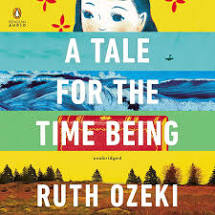
Ruth Ozeki’s novel A Tale for the Time-Being is one of my all-time favourite pieces of Canadian Fiction. You would be hard-pressed to find a better example of how, for better or for worse, writing can bring us as human beings closer together and help us understand each other. Ozeki’s metafictional novel captures the joy and pain of her expertly crafted characters and encourages her reader to connect with them on an incredibly intimate level.
Ozeki’s novel follows the story of two primary narrators. The first, a young Japanese-American girl who has just moved to Japan from America and longs for all the things she grew up with in America. The girl, Nao Yasutani, writes in her diary about the struggles she faces growing up in a brand-new world, and about how she misses her friends and luxuries back “home.” Nao eventually comes to question her love of her former life, and forms a bond with her grandmother through Zen Buddhism.
The second narrator is a woman living with her husband, an environmental activist, on one of the gulf islands off the coast of British Columbia. This woman’s name is Ruth. Ruth finds Nao’s diary wash ashore one day after the tsunami in Japan in 2011, and sets out to find Nao and make sure she is safe.
When people ask me if I have book suggestions, this is the first book I suggest. Granted I do tend to find myself gravitating towards books that pull at the heart strings and question what it means to live and find peace in contemporary life.
Ozeki’s writing of her own experiences into her characters Nao and Ruth (aside from the obvious naming of Ruth, Ozeki is a Zen Buddhist priest who lives in British Columbia and comes from Japanese heritage) puts her as the author in an intensely vulnerable position and allows her reader to identify with them in the highest possible capacity.
If you do decide to read A Tale for the Time-Being, be prepared to laugh and cry at a moment’s notice as you make your way through this whimsical yet intensely philosophical novel. There is a reason that Ozeki piled up the awards for this book, including winning the Los Angeles Times Book Prize for fiction and being shortlisted for the Man Booker prize.
 Rory Reads